
Subtotal $0.00
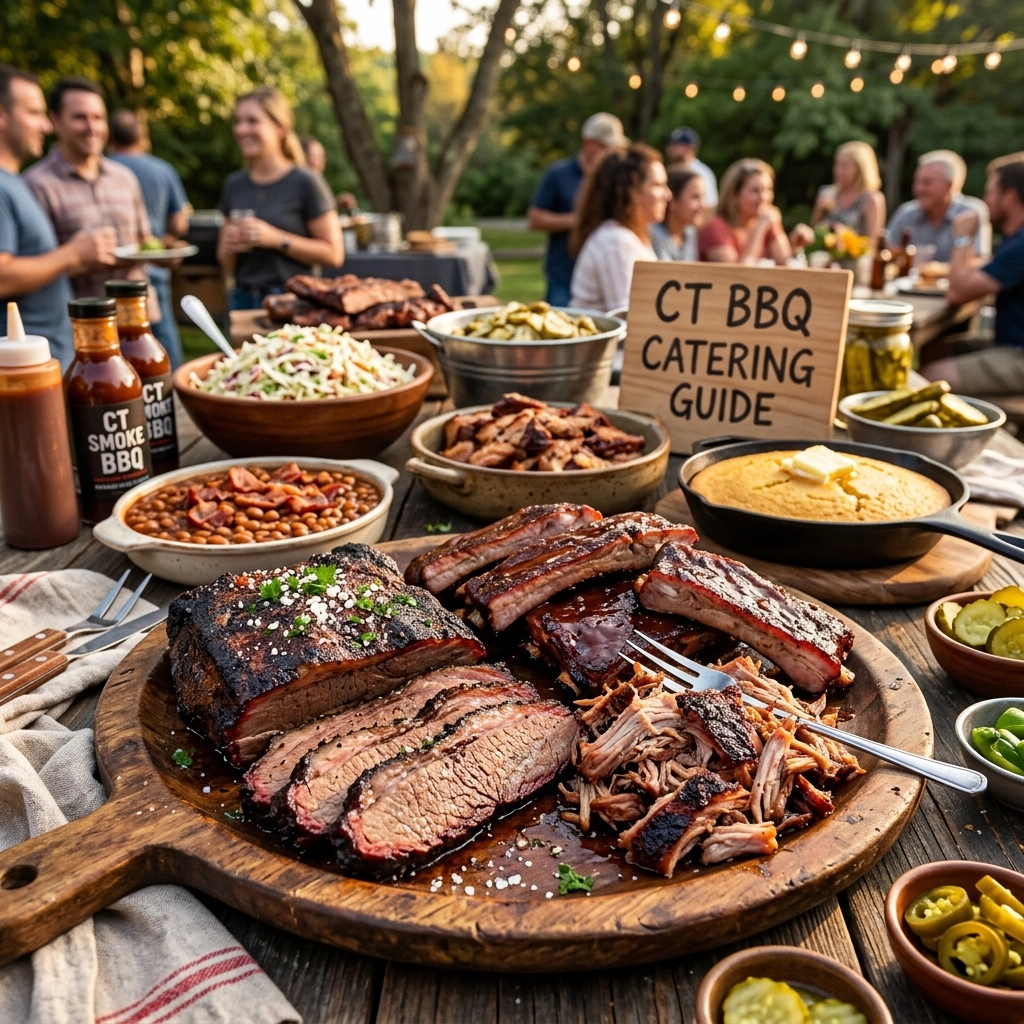
Feeding a large group in Connecticut requires more than just high-quality smoke and fire.
It requires logistical precision.
Most event hosts face a common dilemma – ordering too much food leads to wasted budget, while ordering too little leads to guest dissatisfaction.
Effective bbq catering ct hinges on understanding "The Meat Math."
This guide provides a professional-grade framework for calculating portions to ensure your next event is fully fueled without unnecessary waste.
The Core Principle of Barbecue Calculation
The standard metric for a successful event is the cooked weight of the protein.
As a general rule, plan for one-half pound of cooked meat per adult guest.
This number shifts based on the time of day, the duration of the event, and the variety of options provided.
If you are hosting a corporate event during lunch hours, guests typically consume less than they would at a Saturday night wedding.
For events with a high percentage of children or older adults, you can safely adjust the calculation to one-quarter pound per person for those specific demographics.
We recommend applying a 1.1 multiplier to your final total – this provides a safety buffer for unexpected guests or high-volume eaters.

Understanding Cooking Loss and The Shrinkage Factor
One of the most frequent mistakes in planning ct bbq catering is confusing raw weight with cooked weight.
Barbecue meats, particularly high-fat cuts like brisket, undergo significant weight loss during the low-and-slow smoking process.
Fat renders out and moisture evaporates over the course of 12 to 14 hours.
- Brisket and Pulled Pork: These cuts typically lose 40% to 50% of their weight.
- Ribs: While they don't "shrink" in the same way, the bone weight must be accounted for.
- Chicken: Expect a 25% to 30% weight reduction after smoking.
If you are purchasing meats by the pound for a DIY setup, you must buy double the raw weight to reach your target cooked weight.
When you partner with a professional for bbq catering connecticut, we handle these calculations for you, delivering the exact cooked weight required for your guest count.
The Specific Meat Breakdown
Different proteins serve different roles on a catering menu.
The way people eat authentic bbq changes depending on how many options are on the table.
Beef Brisket
Brisket is often the focal point of the meal.
Because it is rich and nutrient-dense, a standard serving is 5 to 6 ounces when other meats are present.
If brisket is the only protein, increase this to 8 ounces per person.
Pulled Pork
Pork is highly efficient for large-scale catering.
It holds heat well and is easy to serve in a buffet line.
Plan for 4 to 5 ounces per person if it is part of a multi-meat spread.
Pork Ribs
Ribs are calculated by the bone rather than the ounce.
A standard rack contains 12 to 13 bones.
For a full-service meal, plan on 3 to 4 bones per person.
If ribs are just one of three meat options, 2 bones per person is usually sufficient.
Smoked Chicken
Chicken is a necessary lean protein option for many Connecticut crowds.
We typically recommend calculating by the piece – one or two pieces (thigh/drumstick or breast/wing) per person.

Side Dish Logistics: Balancing the Plate
Sides are not just fillers – they are essential for balancing the richness of the meat.
When planning sides, the easiest way to calculate is by the gallon or by the ounce.
- The Ounce Method: Plan for 4 to 6 ounces of each side dish per person.
- The Gallon Method: One gallon of a side dish generally feeds 20 to 25 people.
If you offer three or more side options, guests will take smaller portions of each, but the total volume consumed usually remains the same.
Popular Connecticut staples like mac and cheese or potato salad are "heavy" sides – guests will naturally take more of these than they will of lighter options like coleslaw or a green salad.
Do not forget to account for vegetarian guests.
Ensure at least two of your sides are substantial enough to serve as a primary meal for those who do not eat meat.
Calculating for Different Group Sizes
To simplify your planning, use these baseline estimates for a standard "two meats, two sides" menu.
For 25 Guests
- 12 to 15 pounds of cooked meat total.
- 3 gallons of sides (divided among 2-3 options).
- 30 to 35 rolls or pieces of cornbread.
For 50 Guests
- 25 to 30 pounds of cooked meat total.
- 5 to 6 gallons of sides.
- 60 to 65 rolls.
For 100 Guests
- 50 to 60 pounds of cooked meat total.
- 10 to 12 gallons of sides.
- 120 rolls.

Event Style: Buffet vs. Plated
The service style significantly impacts how much food you need to order.
Buffet Service
Buffet service is the standard for barbecue.
It allows for speed and efficiency.
However, people tend to over-serve themselves in a buffet line.
When using a buffet setup, always lean toward the higher end of your portion estimates.
Plated Service
Plated service offers the highest level of portion control.
If your event is formal, you can stick strictly to the 6 to 8-ounce meat portion.
This method reduces waste but requires more staff to execute.
Connecticut Specific Considerations
The environment of your event plays a role in consumption.
A backyard graduation party in July heat often sees lower appetites for heavy meats and higher demand for cold sides and hydration.
Conversely, an indoor holiday event in December often results in guests eating significantly more protein.
Location also matters for delivery logistics.
Many Connecticut venues have specific load-in requirements or lack kitchen facilities.
Choosing a caterer who understands the local geography – from the hills of Litchfield to the shoreline – ensures your food arrives at the correct temperature and on schedule.

Practical Tips for the Host
- Order by Weight: Whenever possible, order your bbq by the pound rather than by the "head" to get the most transparent pricing.
- Consider the Sandwich: Serving meat on rolls (sliders or full-size) naturally controls portions and makes the food go further.
- The "Last Meat" Rule: In a buffet, the meat placed at the end of the line is usually taken in smaller quantities because guests' plates are already half-full.
- Buffer for "Take-Home": If you want guests to take leftovers, add an extra 15% to your total meat order.
Streamlining Your Planning Process
Calculating portions does not have to be a guessing game.
By following these metrics, you can ensure your event is properly provisioned and your budget is used effectively.
King of Que BBQ specializes in the logistics of feeding large groups throughout Connecticut.
We focus on the "Meat Math" so you can focus on your guests.
If you are planning an upcoming gathering, you can explore our catering options or look into our party packages for a more curated experience.
For those looking to provide a unique gift or incentive, we also offer gift cards for our premium smoked products.
Reliability and precision are the hallmarks of a great pitmaster – and a great host.
Use this guide to build a solid foundation for your next event.