Subtotal $0.00
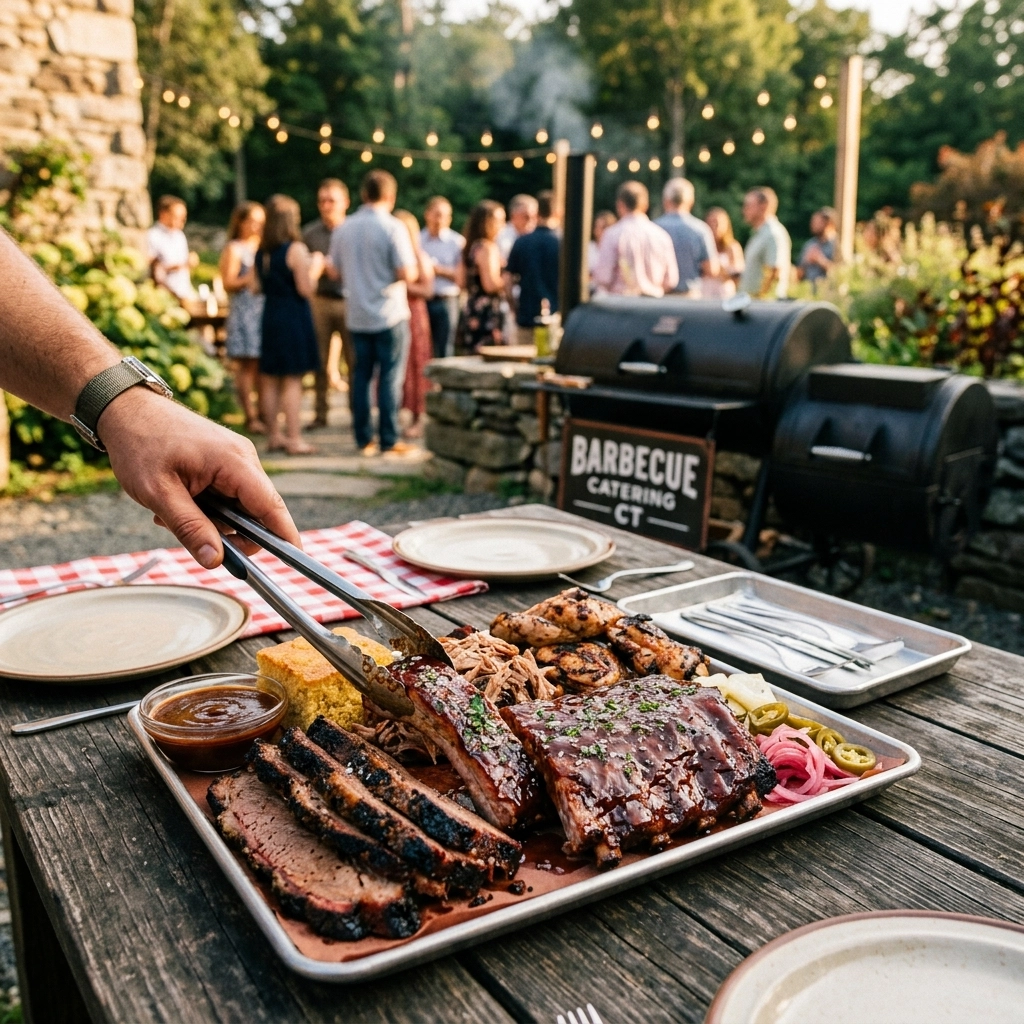
Organizing an event in Connecticut requires precise coordination – from the guest list to the venue logistics.
Food is the central pillar of any gathering, yet it is often the most significant point of failure if not handled by professionals.
When searching for barbecue caterers in CT, the options can be overwhelming – and the quality varies significantly between a hobbyist and a professional-grade operation.
A failed catering experience – characterized by cold food, late arrivals, or insufficient portions – can compromise the success of your entire event.
To ensure your Connecticut bbq catering meets high-caliber standards, you must look beyond the menu and evaluate the operational capabilities of the provider.
The following guide outlines five critical questions to ask before booking your catering partner.
1. How Do You Manage Consistency and Portions at Scale?
Many bbq caterers in ct can prepare a single brisket for a small group, but scaling that quality to 200 or 500 people is a different logistical challenge.
Consistency is the hallmark of a professional-grade pitmaster – every slice of meat must maintain the same moisture content and flavor profile regardless of the headcount.
Ask the caterer about their specific portioning metrics – specifically, how many ounces of protein are allocated per guest.
- A standard professional allocation is usually 5 to 6 ounces of cooked protein per person for a multi-meat menu.
- Note that raw weight is not the same as cooked weight – brisket and pork shoulder can lose up to 40% of their mass during the smoking process.
Understanding these calculations ensures you do not run out of food mid-event.
We maintain strict quality control protocols to ensure every tray that leaves our kitchen meets the same high-caliber standards.

2. Is Your Equipment Mission-Ready for On-Site Execution?
The logistics of transporting smoked meats are complex – maintaining heat without overcooking the product is a technical skill.
Ask your potential caterer whether they cook on-site or transport food in insulated carriers from a central kitchen.
Both methods are valid, but they require different equipment and logistical planning to be successful.
- On-site cooking provides visual "dining theatre" but requires a significant footprint and specific fire safety clearances.
- Off-site preparation followed by professional transport requires high-end Cambro units to keep food in the "safe zone" (above 140°F) without drying it out.
If your event is in a remote location or a park with limited utilities, your caterer must be self-sufficient.
They should arrive with their own power, water, and sanitation setups – avoiding any reliance on your venue's infrastructure.
For detailed information on our operational capabilities, you can view our Full-Service Catering options.
3. How Do You Handle Dietary Logistics and Menu Diversity?
While traditional barbecue centers on meat, modern Connecticut bbq catering requires inclusive menu planning.
Guests often have varied dietary requirements – including gluten-free, dairy-free, and vegetarian needs.
A professional caterer should view these not as inconveniences, but as standard logistical requirements.
- Ask if their rubs and sauces are gluten-free – many traditional recipes use flour or thickeners that contain allergens.
- Inquire about "elevated comfort food" sides that cater to vegetarians – such as high-quality salads, smoked vegetables, or specialized mac and cheese.
A diverse Menu ensures every guest receives high-caliber fuel, regardless of their dietary restrictions.

4. What Is Your Protocol for Timing and Service Flow?
Timing is the most critical logistical element in any catering contract – the window of peak food quality for smoked meats is narrow.
A delay of 30 minutes can be the difference between a juicy brisket and a dry one.
Ask for a detailed timeline of their arrival, setup, service duration, and breakdown.
- Setup should typically begin 60 to 90 minutes before the first serving time.
- The caterer should have a strategy for "buffet flow" – managing lines efficiently to ensure guests spend more time eating and less time waiting.
If you are hosting a high-stakes event, such as Healthcare Catering, timing is even more critical due to strict shift schedules.
Professional barbecue caterers in ct will provide a lead supervisor to coordinate directly with your event planner on the day of the event.

5. What Are Your Professional Credentials and Insurance Limits?
Professional-grade execution requires more than just a smoker and a truck – it requires legal and financial accountability.
Do not overlook the administrative side of the business when vetting bbq caterers in ct.
- Ensure the caterer is fully licensed by the Connecticut Department of Public Health.
- Verify that they carry comprehensive general liability insurance – many corporate venues will not allow a caterer on-site without a certificate of insurance (COI).
These credentials are proof of a legitimate business operation that prioritizes safety and professional standards.
At King of Que BBQ, we operate with full transparency and maintain all necessary certifications to provide a secure and reliable service for our partners.
You can review our Terms and Conditions for more information on our service standards.
The Importance of Local Expertise in Connecticut
Selecting a caterer with deep roots in the local community provides an added layer of reliability.
Local caterers understand the specific layouts of Connecticut venues – from the narrow streets of historic towns to the open fields of Litchfield County.
We have built specific expertise in several key regions, including:
This local knowledge allows us to anticipate traffic patterns and venue-specific challenges that out-of-state vendors might miss.

Final Checklist for Your Selection Process
Before you sign a contract with any barbecue caterers in ct, perform a final review of these operational details:
- Written Quote: Does the quote include tax, gratuity, and delivery fees, or are there hidden costs?
- References: Can they provide examples of similar-sized events they have managed successfully?
- Communication: Do they respond to inquiries within 24 to 48 hours? Poor communication during the planning phase usually indicates poor execution on the event day.
- Portion Guarantees: Is the amount of food guaranteed in writing?
Professional Connecticut bbq catering is a logistics business first – the food is the final product of a well-executed plan.
By asking these five questions, you move beyond the surface-level marketing and identify a partner who can deliver a reliable, high-caliber experience for your guests.
If you are ready to discuss the logistics for your next event, you can Request a Quote directly from our team.
We are ready to provide the professional-grade fuel your event deserves.