
Subtotal $0.00
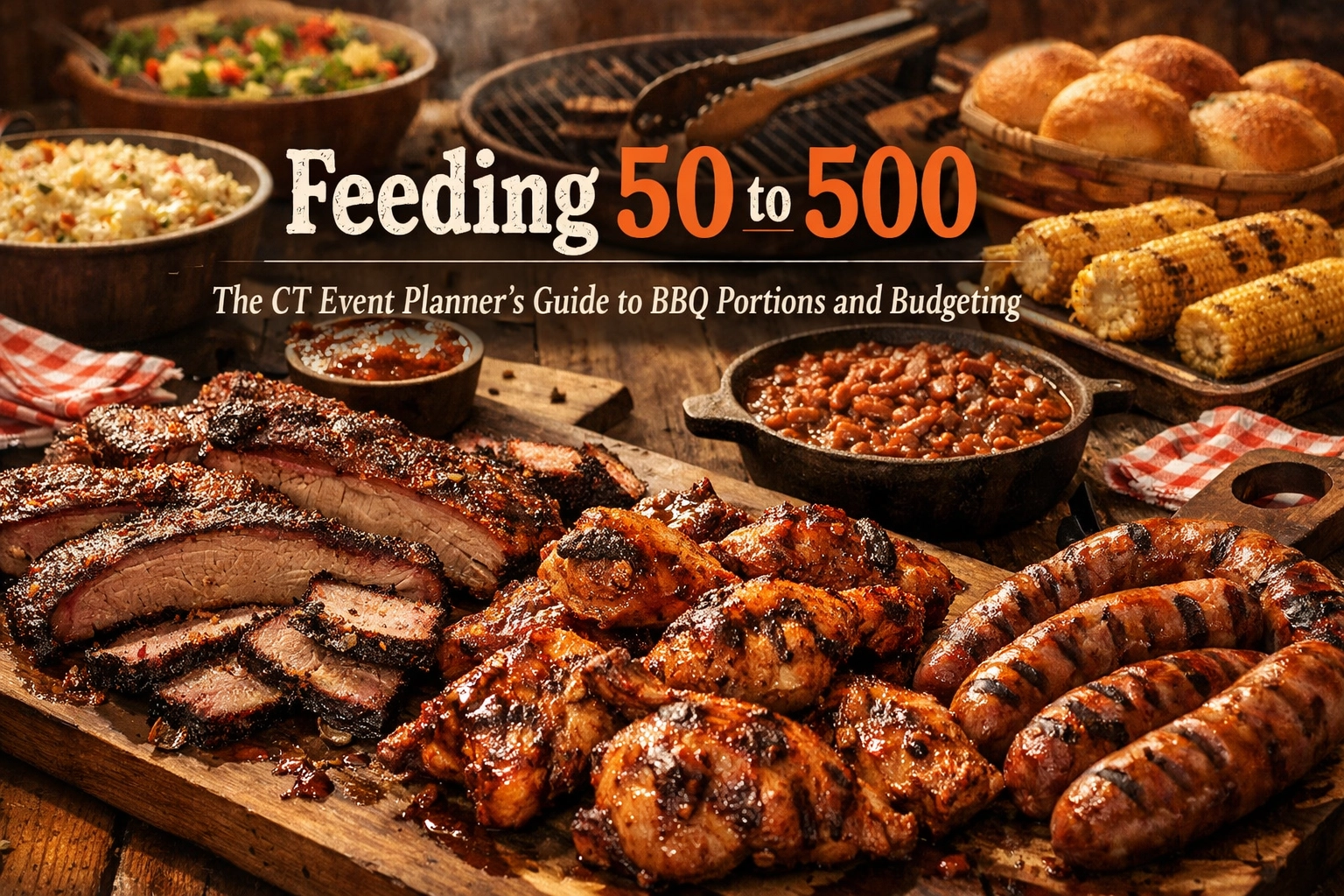
Scaling a catered event from 50 guests to 500 presents challenges that go beyond simple multiplication. Every event planner in Connecticut knows the difference between feeding a corporate luncheon and managing a full-scale company celebration: and BBQ catering introduces its own set of variables.
The question isn't just "how much food do we need": it's how to maintain quality, control costs, and execute flawlessly regardless of guest count.
Here's what you need to know about portions, budgeting, and scaling BBQ events in Connecticut.
Understanding BBQ Portions: The Foundation

Event success starts with accurate portioning. Underestimate and you risk running out mid-event. Overestimate and budget dollars go to waste.
Per-Person Meat Guidelines:
- Brisket: 6-8 oz per person as a main protein, 4-5 oz if part of a multi-meat offering
- Pulled Pork: 5-6 oz per person as a main protein, 3-4 oz in combination plates
- Chicken: 6-8 oz per person (approximately one quarter per guest)
- Ribs: 4-5 bones per person as a featured item, 2-3 bones as part of a variety plate
These numbers account for typical adult appetites at lunch or dinner events. They factor in the reality that guests will take seconds of what they love: and BBQ generates enthusiastic second helpings.
The Multi-Meat Advantage:
Offering two or three protein options doesn't require full portions of each. A combination plate with pulled pork, brisket, and chicken typically totals 10-12 oz per person across all three meats. This approach provides variety while controlling costs and waste.
Sides, Fixings, and the Complete Plate
Meat drives BBQ catering, but sides complete the experience: and impact your budget.
Standard Side Portions:
- Mac & Cheese, Coleslaw, Baked Beans: 4 oz per person per side
- Cornbread: 1-2 pieces per person
- Pickles, Onions, Jalapeños: 1-2 oz combined per person
- BBQ Sauce: Plan for 2-3 oz per person (some guests use heavily, others sparingly)
Most events work best with three to four side options. More than four creates decision fatigue and increases waste. Fewer than three feels sparse for BBQ service.
The Buffer Factor:
Professional catering builds in a 5-10% buffer above exact guest count. This accounts for last-minute additions, enthusiastic eaters, and operational safety. For a 200-person event, we prepare for 210-220.
Costs and Complexity at Scale

Scaling from 50 to 500 is not just more food. As guest counts, proteins, and sides increase, so does the complexity and cost for King of Que BBQ.
Typical pricing range: $30–$100 per person.
That range depends on menu scope and service logistics.
Menu variables that drive cost:
- Number of guests – more volume requires more production, packaging, and timing control
- Number of proteins – each protein adds prep paths, holding requirements, and service coordination
- Number of sides – more sides means more production steps, transport, and hot/cold management
- Appetizers – adds staffing time, staging, and service flow complexity
- Salads – adds cold-chain handling and separate service needs
- Vegetarian options – adds separate prep, labeling, and cross-contact controls
- Bread items (rolls, cornbread, buns) – adds sourcing, portioning, and replenishment planning
- Tableware – disposable vs. plate service changes both materials and execution
Logistics variables that drive cost:
- Pickup vs. delivery – delivery adds load-out, transport, and on-site setup requirements
- Delivery distance – more travel time and routing constraints
- Service type – pickup, delivery, buffet setup, or full-service staffing
- Disposable chafing stations – adds equipment and fuel, plus additional setup and cleanup steps
Our goal is consistent, professional execution of these moving parts – clear timing, accurate quantities, reliable service flow, and organized cleanup.
The Scaling Challenge: Maintaining Quality Across Hundreds

The difference between acceptable BBQ for 50 and excellent BBQ for 500 comes down to systems, equipment, and execution planning.
Temperature Management:
Smoked meats require precise holding temperatures. Below 140°F creates food safety concerns. Above 165°F dries out protein and degrades quality.
Large events demand commercial-grade warming equipment with accurate temperature control: not just chafers with sterno fuel. Our approach uses professional warming cabinets that maintain exact temperatures for hours without quality loss.
Timing and Production:
A 50-person event might pull from one smoker batch. A 500-person event requires coordinated production across multiple days, with strategic resting and reheating protocols.
Brisket, for example, benefits from smoking one day prior, resting overnight, and gentle reheating on event day. This approach actually improves flavor while enabling better workflow management.
Serving Station Strategy:
Beyond 150 guests, single-line buffets create bottlenecks and frustration. Multiple stations with identical offerings distribute guests and maintain service flow.
For 300+ guests, we plan three to four stations minimum: typically one per 100 guests: to keep wait times under five minutes.
Planning Timeline: When to Book and Confirm
Connecticut's event season runs April through October, with June and September representing peak demand. Securing your date requires advance planning.
Recommended Booking Windows:
- 50-100 guests: 4-6 weeks minimum, 8-12 weeks for peak season dates
- 100-250 guests: 6-8 weeks minimum, 12-16 weeks for peak season
- 250-500 guests: 8-12 weeks minimum, 16-24 weeks for peak season
Final headcount confirmation typically happens 7-10 days before your event. This window allows for production planning while accommodating last-minute guest count adjustments.
Menu finalization should happen 2-3 weeks out, giving time for specialty item sourcing and preparation planning.
Real-World Event Scenarios
Corporate Summer Celebration – 180 Guests:
A manufacturing company in Waterbury books July Friday afternoon service for employee appreciation. Menu includes pulled pork, brisket, and chicken with four sides. Station service at two locations keeps lines moving during 90-minute service window. Budget: $4,200 total.
Wedding Reception – 250 Guests:
Saturday evening event in Litchfield County features dual-protein buffet (brisket and chicken), upgraded sides including lobster mac and cheese, and full bar service coordination. Three serving stations manage guest flow. Budget: $6,750 for food service.
Healthcare System Annual Picnic – 450 Guests:
Large outdoor event in Hartford requires logistics coordination with facility management, four serving stations, extended service time, and allergy accommodation protocols. Three-meat offering (pulled pork, brisket, chicken) with five side options. Budget: $10,800 for catering service.
Hidden Cost Factors Event Planners Should Consider
Beyond per-person food costs, complete budget planning accounts for service elements that impact total investment:
- Travel and delivery fees for locations outside standard service areas
- Equipment rental if venue lacks adequate warming or serving infrastructure
- Extended service time beyond standard 2-3 hour windows
- Staffing additions for complex service requirements or venue restrictions
- Last-minute guest count increases beyond contracted numbers
Professional caterers outline these factors clearly during initial consultation: avoiding surprise charges at final invoice.
Making the Decision: What Matters Most
Event success ultimately depends on three factors working together: accurate planning, quality execution, and clear communication.
The event planner who provides detailed information: guest count, timing requirements, venue specifics, service expectations: enables better preparation and smoother execution.
The caterer who asks the right questions, offers transparent pricing, and executes reliably builds relationships that span multiple events.
Connecticut event planners face no shortage of catering options. The difference shows up on event day: when the food arrives on time, temperatures hold perfectly, guests move through lines efficiently, and quality matches expectations for guest one through guest 500.
That's what Crafted for Crowds means. Not just feeding hundreds: feeding them well, efficiently, and professionally every single time.
Ready to plan your next event? Contact King of Que BBQ to discuss your specific needs, get accurate portion guidance, and receive detailed budget planning for your Connecticut event. Whether you're feeding 50 or 500, we handle the details so you can focus on your guests.